Sunday, November 10, 2013

"The Elephant in the Room"


In school, young children are always taught to accept others for their differences, as respect is a key lesson in schools around the nation. You would think that mature professionals would demonstrate this idea of respect, but they do the complete opposite. On a recent cover of TIME Magazine, the media publicly mocked Chris Christie for his weight. Chris Christie is the reelected Governor of New Jersey who has been receiving a lot of attention as a potential candidate in the 2016 Presidential Election. 
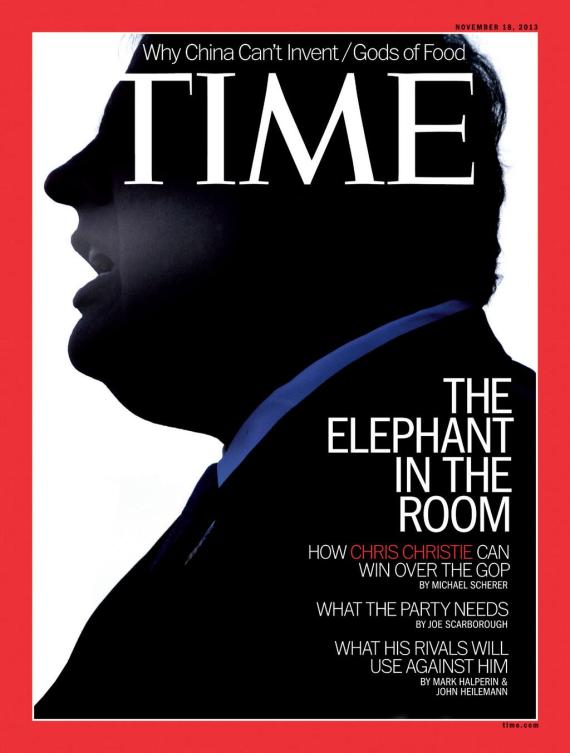
The magazine cover has Christie’s silhouette with the title “The Elephant in the Room.” TIME makes a pun about Christie’s Republican emblem, the elephant, as well as his weight. Many criticized TIME by calling the cover, a “cheap shot”. In response, TIME says: “the cover is a reference to the size of his influence, not his waistband.” To read more about Chris Christie and the TIME magazine cover, click here

I disagree with TIME's response. If the cover was purely to emphasize the greatness of Christie’s influence, the magazine could have used a different title that showed their clear intentions. Why are younger generations taught respect and equality when adults and the media demonstrate the opposite? 


Do you think the cover is offensive or harmless? What do you see as the message from the cover? Why are the values being taught in America not coherent with the actions of Americans?

Saturday, November 2, 2013

Racist "Sum Ting Wong" Costume


Many people can unintentionally offend others with their Halloween costumes. For example, dressing up as a “Native American girl” can offend Native Americans by making a costume out of their stereotype. Being a “Native American” is so popular among girls because there is a cultural beauty behind the costume; they do not purposely try to offend the people. On the other hand, I was appalled by the extremely racist costumes that a few young men came up with this year. 

Three young men from Chicago dressed up as Korean flight attendants who died in the July Asiana Airlines crash this year. Not only did these men make a joke about the deaths of 3 people, but on their costumes, they used fake, offensive names of 4 pilots. Posted on their jackets were the names “Captain Sum Ting Wong,” “Ho Lee Fuk,” “Wi Tu Lo,” and “Bing Dang Ow.” They used these names from a KTVU report that many viewers saw as a rude, racist joke. Another man from Lake Tahoe, CA wore a similar costume with the same names. To read more about this, click here. 


Maybe these costumes offended me even more because I am Korean American, but I could not understand why these men would wear these costumes. I think that these men knew that they were going to get bashed on for being racist and for mocking the death of 4 people in a plane crash. Sadly, I think that there will always be some sort of discrimination in the world. I know that people make fun of Asians with small comments and such, and that's a reality that I already understand, but I find it rude how they blatantly made fun of Asians.

What are your thoughts on racism in the U.S.? What do you think were the intentions of these three young men? Is unintentional racism just as bad as intentional racism? What about racism in the mind vs. racism in public?

Sunday, October 27, 2013

Commercial Craze

As I was watching t.v. today, a Diet Pepsi commercial with Sofia Vergara aired during the break. To watch the full commercial click here. Pepsi used specific elements to promote their product. The music and wedding scenario gives the commercial an upbeat vibe. Popular celebrity Sofia Vergara comes into the scene, already attracting viewers with her Spanish. During Vergara’s accidental wedding toast, her distraction to the Diet Pepsi creates humor for the viewers.  Vergara is wearing a blue, form fitting dress and bright red lipstick. With her white smile, the three colors recreate the Pepsi logo.

Pepsi and other companies spend a lot of money on t.v. and online commercials.
Kantar Media, a marketing research firm, says that the total money spent on t.v. ads increased 3% in 2012 and the total for video ads increased 27% percent. Companies are spending more money on advertising their products and services because there is constant competition. The music, setting, people, colors, and even small details are all considered to attract potential customers. In the commercial, Pepsi does not focus on the product itself. There is no detail of the taste or texture of the actual drink. Companies are using the commercial to sell this false emotion of feeling good when drinking Pepsi. Viewers may think "if Sofia Vergara loves it, it must taste great," or "she's pretty and popular; she knows what's in trend." Americans are being sold feelings and perceptions, not the truth.

Why do companies put attractive celebrities or actors? Fast or slow music? Specific scenarios? What kinds of emotions do they want Americans to feel when they watch their commercials? Are companies tricking us? What are your thoughts on this competition? How are Americans reacting to this commercial craze?

Monday, October 21, 2013

Pumpkin Spice and Everything Nice


We’re in the heart of pumpkin season, and companies have gone “pumpkins”! I made a trip to the grocery store over the weekend and was overwhelmed by the number of pumpkin products in the store: spreads, candles, cookies, lotions, and more. Bruce Horovitz agrees that the pumpkin is “everywhere these days” and says that the “number of pumpkin offerings domestically jumped nearly 19% last year.” The taste and smell of pumpkins are great, but why are so many companies trying to come up with pumpkin flavored and scented products? 

2013 marks the 10th year anniversary of Starbucks’s Pumpkin Spice Latte. In the past 10 years, Starbucks has sold more than 20 million of these drinks, about 2 million annually. When Fall comes around, Americans spend around $80 million total on the latte per year. Micheline Maynard  says that Starbucks is evening trying to make a vegan friendly version because of so many requests from customers.

Because Starbucks has gained immense popularity and profit from this drink, other companies have tried to use pumpkin in their products. Starbucks’s Pumpkin Spice Latte fueled the popularity of pumpkins. Pumpkins have been in the U.S. since the 1500s, but why the popularity now (www.history.com)? I think that many Americans follow current trends. We're becoming nostalgic because we miss old customs and simplicities. Numerous trends from the past, like scrunchies and black and white clothing, have come back with periods of popularity. So what is happening?

Are Americans reminiscing on the past? Are we losing touch and just recycling ideas? Why are trends from the past coming back? Why do Americans follow trends at all? Have we all just gone “pumpkins”?