
Saturday, March 22, 2014

The First Family

President Xi Jingping and his wife greeting the First Lady, Malia Obama, and Sasha Obama.
Both of President Barack Obama's daughters, Malia and Sasha, attended their mother, the First Lady, to a week-long trip to China. There, they met China's president, Xi Jingping, and his wife Peng Liyuan. Press in the U.S. as well as in China, were shocked at the fact that Xi's daughter, Xi Mingze, didn't greet the Obamas with her parents. Xi Mingze was back home with her parents for Spring Break, so why didn't she greet the Obamas? 

It is believed that Xi Mingze is 21 years old and is studying at Harvard University under a pseudonym. President Xi Jingping and his wife have hid Xi Mingze from their people for a long time, and I wonder why. Click here to read more about the situation.

Another article confirmed that Xi Mingze did have dinner with the women of the Obama family, but I am most surprised about how she didn't greet the family in public. I think that presidents and their families, whether in the U.S. or China, have a duty to represent their family in a positive way. In a way, the First Family also represent their own country. I just don't understand what all the secrecy is about. 

What I find interesting though is the contrast between how Xi Jingping has/allows her daughter to hide from the public, while it is natural for Obama's daughters to be seen everywhere. America's people are constantly seeing pictures and posts from celebrities as well as . This leads me to the question: Why are famous figures in the U.S. so open to being in public? What does this say about America's customs and values? How do they differ from other countries in the world?

Wednesday, March 19, 2014

The Bling Ring

Although "The Bling Ring" isn't a well known movie, I decided to take my chances by watching it this weekend. It's based on a real group of teens who were convicted of robbing California homes, many being those of celebrities, during 2008-2009. I didn't expect the remark that one character in the movie, Marc, made on America's society and people. If you want more information about "The Bling Ring" movie as well as the real group, click here. 

During an interview, a journalist asked Marc why he continued to steal, even though he knew it was morally wrong. Marc acknowledged that he would have rather been famous for a good deed, but he said that "America has this sick fascination with the Bonnie and Clyde kind of thing." I was surprised by Marc's comment about Americans. If you don't know who Bonnie and Clyde were, they were American robbers from the South who stole from and killed people and stores during the Great Depression. To read further about Bonnie and Clyde and what they did, click here.

To be honest, I think that what Marc said is very true. I interpreted what he said as, "Americans are strangely interested in hearing about crazy stories or people in the news, and no one admits it because it's unacceptable in society". On the news, most announcements are sad or scary; when do we really get to hear about the good in society? Many people, especially teens, love hearing about celebrity gossip, but why is that? Why is it that celebrities get away with pulling crazy stunts, while the "average person" is looked at al psychotic when they do the same?

How did you interpret Marc's quote? What does it say about America's values and culture? What are your thoughts about what he said? 

Sunday, March 9, 2014

Humans of the United States


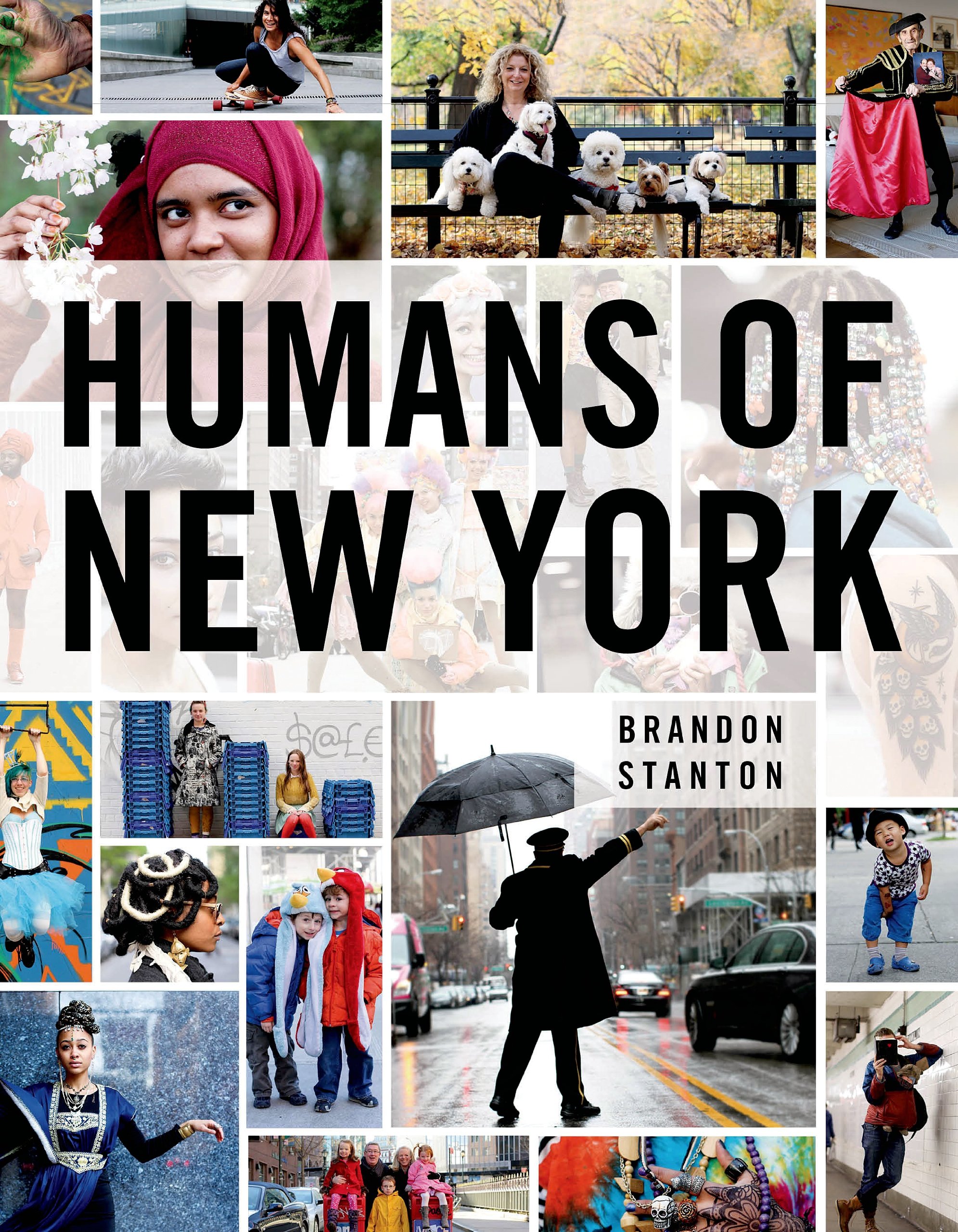
While I was scrolling through my news feed on Facebook, I saw that a lot of my friends were liking pictures from the "Humans of New York" Facebook page. I checked out the page and was presently surprised with what I came across. "Humans of New York" is a catalogue of pictures of people who live in NYC. Not only are there pictures in the catalogue, but there are short stories or quotes beside the photo from the people in the scene. Some of the things said by the inhabitants are not what you would expect after looking at the photo, making the blog so interesting to read. The honesty of the quotes and the expressions of the everyday people remind the audience that their story is real life. 

I recommend liking the "Humans of New York" page on Facebook by clicking on this link, following their blog by clicking here, or picking up the catalogue, created by Brandon Stanton.

After looking through the HONY blog, I realized that each post was unique. The quotes under each picture share a piece of the story of the person in that photo. I felt a sense of unity with the people in the blog. Although I have never met the people in the blog and are our stories aren't the same, I realized that we all live through different hardships. There is definitely unity in the U.S. when we need each other. We mourn together when we see suffering or loss in one part of the country and commend others when we see nobility or progress in another. The events that happen in our lives make us who we are today, and I believe that each person in the United States, with their stories, make up our nation's story. 

So my question is: What is America's story? If there was a picture of the U.S., what would be the snippet under the photo? Looking back at the past, what do you think made up America's history, and how do the lives of the American people affect the history that is being made right now?

Friday, February 21, 2014

In Your Element

A picture of IU Bloomington's gates.
My family and I started planning for Spring Break, and this year, there's one thing that they're focused on: College visits. When narrowing down what college a person wants to attend, there are many factors that help the student make a final choice:  I believe that the environment of the school is a key factor in the process. 

I would argue that the environment and area of a college is an important factor because people have a certain comfort level that they want to maintain. When deciding on colleges, students are encouraged to branch out and look at colleges into other parts of the country or even in the world. I think that this contradicts with the tendency that a lot of students choose to go to college near their home. 

Fox Business agrees with the fact that a college's surroundings majorly influence a student's decision. One of their articles says that a pro for staying in state is that "students have the option to go home more often since it doesn’t involve a plane or train ticket, or a long drive." This goes back to the comfort level I was talking about before. Even if a student did go to a college on the other side of the country, the type of people and lifestyle can be similar. I'm not saying we should all take crazy risks and go places totally out of our element. I'm just wondering why we put such boundaries on ourselves when we make decisions.

Did you consider a school's environment when picking a college/place to live? Are you considering it right now? How would you define America's comfort level? How have Americans been influenced by American society when making decisions?